
When you visit a doctor and give a urine sample, one of the key things tested is the specific gravity of urine. It might sound technical at first, but it’s actually a simple and powerful way to understand how well your body is working. From hydration levels to kidney health, this small measurement can reveal a lot.
In this easy-to-follow guide, you’ll learn what the specific gravity of urine means, why it matters, and how it can help you stay healthy. Let’s break it down step by step so it’s clear and useful.
What Is Specific Gravity of Urine?
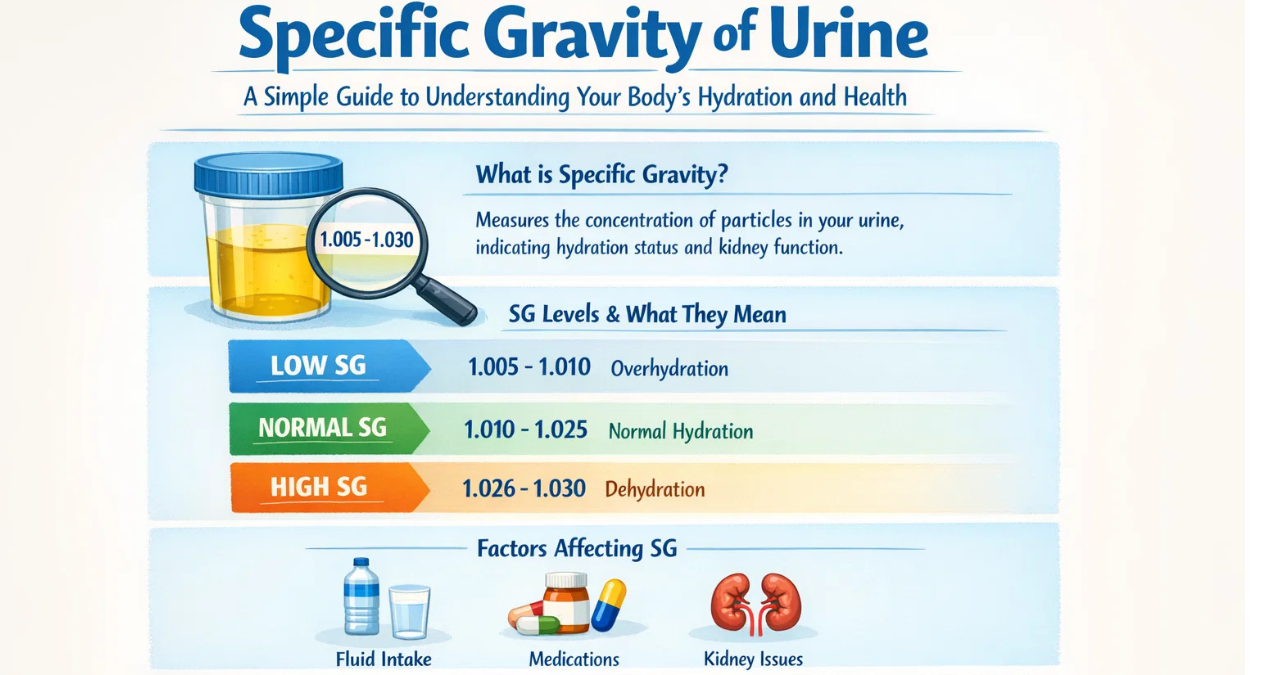
The specific gravity of urine is a measure of how concentrated or diluted your urine is. In simple terms, it compares the weight of urine to the weight of water.
- Water has a specific gravity of 1.000
- Urine usually ranges from 1.005 to 1.030
If your urine has more waste and less water, it will be heavier (higher number). If it has more water and fewer substances, it will be lighter (lower number).
Think of it like juice. If you add more water, the juice becomes diluted. If you don’t add water, it stays strong and concentrated. Your urine works the same way.
Why Does Specific Gravity of Urine Matter?
The specific gravity of urine helps doctors understand how well your kidneys are working and whether your body is properly hydrated.
Here’s why it’s important:
- It shows hydration levels
- It helps detect kidney problems
- It can point to infections
- It may reveal conditions like diabetes
In short, it’s a quick and easy health check. Sometimes, it can even catch problems before you notice any symptoms.
How Is Specific Gravity of Urine Measured?
Doctors measure the specific gravity of urine using a simple urine test. There are a few common methods:
Dipstick Test
- A small strip is dipped into your urine
- It changes color based on concentration
- Fast and commonly used
Refractometer
- A special device measures how light passes through urine
- More accurate than dipsticks
Urinometer
- A floating device that measures density
- Less common today
These tests are painless and usually done in a clinic or lab.
Normal Range of Specific Gravity of Urine
Understanding what’s “normal” helps you know when something might be wrong.
| Condition | Specific Gravity Range |
|---|---|
| Very diluted urine | 1.005 – 1.010 |
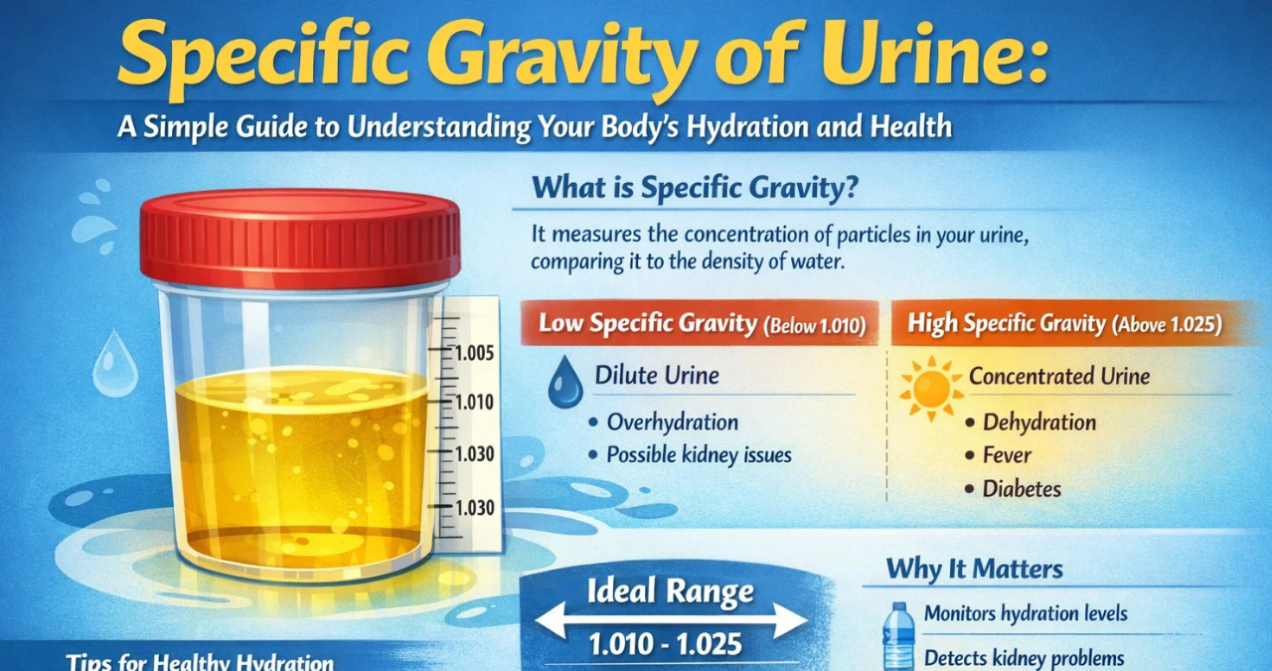
| Normal range | 1.010 – 1.025 |
| Concentrated urine | 1.025 – 1.030 |
A value within the normal range usually means your body is balanced. But values outside this range may need attention.
What Does High Specific Gravity Mean?
A high specific gravity of urine means your urine is concentrated. This usually happens when your body doesn’t have enough water.
Common causes include:
- Dehydration
- Excessive sweating
- Vomiting or diarrhea
- Not drinking enough fluids
Possible medical reasons:
- Kidney problems
- Heart issues
- High blood sugar (diabetes)
If your urine is dark yellow and strong-smelling, it’s often a sign of high concentration.
What Does Low Specific Gravity Mean?
A low specific gravity of urine means your urine is diluted. This happens when there is too much water in your system.
Common causes include:
- Drinking too much water
- Cold weather (less sweating)
- Use of diuretics (water pills)
Possible medical reasons:
- Kidney damage
- Diabetes insipidus
- Hormonal imbalance
Clear or very pale urine often points to low concentration.
Factors That Affect Specific Gravity of Urine
The specific gravity of urine doesn’t stay the same all the time. Many everyday factors can change it.
Hydration
- Drinking more water lowers it
- Dehydration raises it
Diet
- High salt or protein can increase it
- Balanced diet keeps it stable
Exercise
- Heavy workouts can lead to dehydration
- This increases concentration
Medications
- Some drugs change fluid balance
- Diuretics lower concentration
Time of Day
- Morning urine is usually more concentrated
- Daytime urine is often lighter
So, don’t panic if your result changes slightly—it’s normal.
Specific Gravity of Urine and Kidney Health
Your kidneys play a major role in controlling the specific gravity of urine. They filter waste and balance fluids in your body.
When kidneys work well:
- They adjust urine concentration properly
- They keep your body balanced
When kidneys have problems:
- They may not concentrate urine correctly
- This leads to abnormal readings
Doctors often use this test as an early sign of kidney trouble. It’s like a warning light on a dashboard—small but important.
Specific Gravity of Urine in Medical Conditions
The specific gravity of urine can give clues about different health issues.
Diabetes Mellitus
- High sugar in urine increases gravity
- Urine becomes more concentrated
Diabetes Insipidus
- Body can’t control water balance
- Urine becomes very diluted
Urinary Tract Infections (UTIs)
- May slightly raise concentration
- Often paired with other symptoms
Heart Problems
- Can affect fluid balance
- May lead to higher readings
Doctors don’t rely on this test alone, but it’s an important piece of the puzzle.
Real-Life Example: What Your Results Might Mean
Let’s say two people take a urine test.
Person A:
- Specific gravity: 1.030
- Symptoms: tired, thirsty
👉 Likely dehydrated or has high sugar levels
Person B:
- Specific gravity: 1.005
- Symptoms: frequent urination
👉 Possibly drinking too much water or has a hormonal issue
These examples show how the specific gravity of urine can tell different stories depending on the situation.
How to Maintain a Healthy Specific Gravity of Urine
Keeping your urine balance healthy is easier than you might think.
Simple tips:
- Drink enough water daily
- Eat a balanced diet
- Avoid too much salt
- Stay active but hydrated
- Don’t ignore unusual symptoms
A good rule of thumb: your urine should be light yellow. That usually means you’re well hydrated.
When Should You See a Doctor?
Sometimes, changes in the specific gravity of urine need medical attention.
Watch out for:
- Very dark or very clear urine for several days
- Pain during urination
- Frequent urination without reason
- Swelling in the body
- Extreme thirst
If you notice these signs, it’s better to check with a doctor. It’s always safer than sorry.
Common Myths About Urine Specific Gravity
Let’s clear up a few misunderstandings.
Myth: Clear urine is always good
Not always. It may mean overhydration.
Myth: Dark urine always means disease
Sometimes it just means you need more water.
Myth: One test result tells everything
Doctors usually look at multiple tests for accuracy.
Understanding the truth helps you make better health decisions.
Quick Summary Table
| Topic | Key Point |
|---|---|
| Definition | Measures urine concentration |
| Normal Range | 1.005 – 1.030 |
| High Value | Dehydration or medical issues |
| Low Value | Overhydration or kidney problems |
| Main Organ Involved | Kidneys |
| Test Type | Urine sample |
Final Thoughts on Specific Gravity of Urine
The specific gravity of urine might seem like a small detail, but it plays a big role in understanding your health. It gives quick insights into hydration, kidney function, and even hidden medical conditions. The best part? It’s simple, fast, and non-invasive.
By paying attention to your body and staying hydrated, you can keep your levels within a healthy range. And if something feels off, don’t ignore it—your body often gives signals before problems grow bigger.
In the end, knowing about the specific gravity of urine empowers you to take better care of yourself. Stay aware, stay hydrated, and keep your health on track.
You may also read
Will Smith Slap: The Moment That Shook Hollywood and What It Means Today
